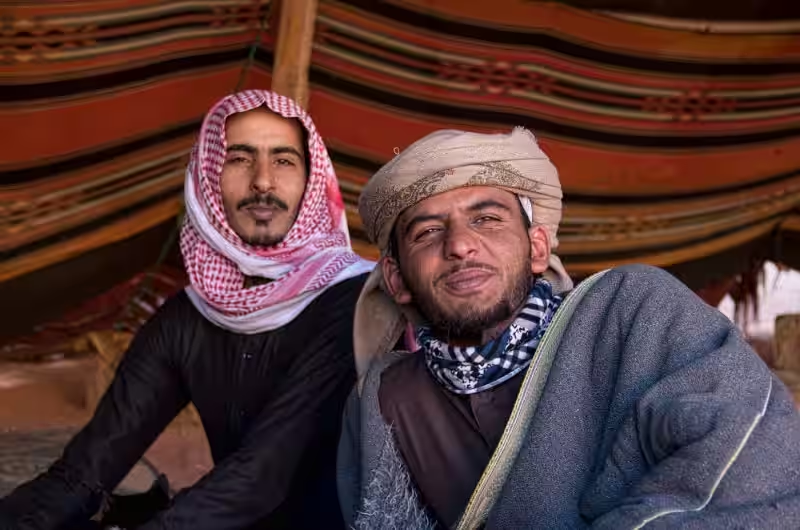
Traditional Clothes of Saudi Arabia: A Tapestry of Regional Styles
Saudi Arabia, a land of vast deserts and ancient traditions, boasts a rich and diverse tapestry of traditional clothing. Beyond the often-cited thawb and abaya, lies a complex world of regionally specific styles that reflect the country’s unique cultural heritage. Understanding these variations is crucial for appreciating the depth and nuance of Saudi Arabian identity. This article delves into the fascinating world of traditional Saudi attire, exploring the significant regional differences and the importance of context in dress choices.
The thawb, a loose-fitting robe, is a cornerstone of traditional Saudi male attire. While white is a common choice, symbolizing purity and simplicity, darker hues are frequently worn during cooler months to better regulate body temperature in the desert climate. The thawb itself is not a single uniform, however. Its variations are incredibly diverse, reflecting the unique needs and traditions of different regions within the country.
These regional variations extend to the thawb’s length, sleeve design, and fabric. The Thawb Murowdin, for instance, is a popular style characterized by its long sleeves, often crucial for cultural performances like the Ardah, a dynamic and energetic dance form. Conversely, the Al-Muthail style is tailored to the specific needs of agricultural communities, reflecting the practical considerations that influence clothing choices. The Ezar, a lower-body garment, is prevalent in Southern regions, further showcasing the regional differences. Styles like the Al-Mathoulq and Al-Haili in Asir, highlight the specific tailoring and fabric choices made for different areas within the larger region, demonstrating the intricate connection between culture and geography. The Al-Mabram style, designed for agricultural work, underlines the practical considerations influencing clothing choices, ensuring comfort and functionality.
This diversity extends beyond the thawb itself. Essential components of male regional attire include the Eqal (a type of head covering), Ghutrah (a checkered head scarf), Bisht (a long, embroidered robe often worn for special occasions), Usabah (a type of belt), and Beidy (a type of waistcoat). The usage and style of these garments and accessories differ significantly across the country, emphasizing the importance of social context and climate in determining appropriate attire.
Beyond the basic thawb, the array of accessories and garments available demonstrate the vast range of traditions. The Ghutrah and Eqal, for example, might be wrapped in different patterns and colors depending on the region, reflecting a unique cultural expression. The Bisht, often intricately embroidered with gold and silver thread, is reserved for special occasions and reflects the region’s rich craftsmanship and cultural heritage. This intricacy, coupled with the Usabah and Beidy, showcases the depth and variety within Saudi Arabian men’s attire.
Women’s Attire: The Abaya and Beyond
Women’s traditional attire in Saudi Arabia, while often associated with the abaya, also exhibits significant regional variations. The abaya, a black cloak, remains the most frequent outer garment for women, but colored abayas are also commonly worn, particularly for celebrations and special occasions. These variations in color and style reflect not only personal preferences but also cultural and regional traditions.
The Tarhah (head covering) and Niqaab (face veil), while integral components of female dress, also vary in style and coverage across regions. Furthermore, regional nuances extend to the specific garments worn underneath the abaya. The Shaila, Thawb Al-Tor, Darra’ah, Thawb Al-Nashl, and the Matrook, are examples of garments commonly found in different regions, often featuring intricate embroidery and embellishments reflecting cultural pride and tradition. These garments, often tailored and designed with specific cultural and regional values in mind, highlight the depth of the Saudi Arabian women’s tradition.
The Dress Code Diversity
The Eastern, Southern, and Western regions of Saudi Arabia all have unique variations in women’s attire. The characteristic designs, materials, and embroidery styles employed in these garments reflect the distinct traditions and customs of each region, creating a beautiful and varied picture of Saudi Arabian women’s attire. Furthermore, the choice of materials and embellishments used in these fabrics is often tied to the economic conditions of the area and the availability of resources. These variations are a testament to the diverse influences shaping the cultural identity of Saudi Arabia.
The clothing choices in Saudi Arabia are not merely about covering the body; they are deeply rooted in cultural traditions, environmental considerations, and social contexts. The varied attire of men and women, with its myriad regional expressions, is a powerful reflection of pride, tradition, and identity. The differences in style and tailoring not only distinguish the various regions of Saudi Arabia but also highlight the importance of acknowledging and respecting these localized expressions of culture.
Traditional clothes in Saudi Arabia are not a static entity; they are dynamic expressions of identity, evolving with time and circumstance, while still retaining their inherent cultural significance. The modern influence is also undeniable, with younger generations adapting Western fashion while maintaining a deep respect for their tradition. By appreciating the complexity and diversity of traditional attire, we gain a deeper understanding of the cultural richness of Saudi Arabia. This nuanced understanding extends beyond the visual aspects of clothing, offering a glimpse into the intricate tapestry of societal norms and traditions that shape the Saudi experience.
Frequently Asked Questions about Traditional Saudi Clothing
This FAQ section addresses common questions about traditional Saudi clothing, acknowledging the rich diversity and regional variations within the country.
What is the official national dress?
There isn’t a single, universally recognized “official” national dress. While the thawb for men and the abaya for women are frequently cited, the reality is much more nuanced. Traditional clothing styles vary significantly across different regions of Saudi Arabia, reflecting local customs, climates, and social contexts.
What types of clothing do men typically wear?
Men’s traditional attire in Saudi Arabia encompasses a wide range of styles, far exceeding just the thawb. The thawb, a loose-fitting robe, is a cornerstone, often white but darker colors are also worn. Regional variations exist significantly, influencing the length, sleeve design, and fabric used. Styles like the Thawb Murowdin, Al-Muthail, Al-Mabram, Al-Mathoulq and Al-Haili demonstrate this diversity, tailored to specific regional needs and activities. Other essential garments and accessories include the Eqal, Ghutrah, Bisht, Usabah, and Beidy. The specific usage of these varies by region and occasion.
The abaya, a black cloak, is the most common outer garment for women. However, colored abayas are also worn. Regional variations in women’s clothing are significant. The Tarhah (head covering) and Niqaab (face veil) are important components of women’s attire. Other regional variations include garments like the Shaila, Thawb Al-Tor, Darra’ah, Thawb Al-Nashl, and Matrook, each frequently featuring intricate embroidery and embellishments. The choices reflect cultural pride, tradition, and the specific region and occasion.
How do regional variations in clothing styles reflect Saudi culture?
Regional variations in Saudi clothing styles demonstrate the interplay between cultural traditions, environmental factors, and practical needs. Clothing choices are a potent expression of regional identity and social context. Respecting these local variations is crucial for cross-cultural understanding and interaction.
How does clothing reflect social context in Saudi Arabia?
Clothing choices in Saudi Arabia are often influenced by the occasion (official vs. daily life), social class (though this isn’t as explicitly expressed in clothing like it might be in some other cultures), and even the prevailing climate. These factors contribute to the rich tapestry of variations in traditional clothing styles.
Is there a difference between clothing in different regions of Saudi Arabia?
Yes, there are significant differences. Clothing styles vary considerably between regions in Saudi Arabia. The Eastern, Southern, and Western regions, for instance, exhibit unique designs, materials, and customs in their traditional garments. The clothing choices reflect the interplay between tradition and adaptation to local environments and needs.