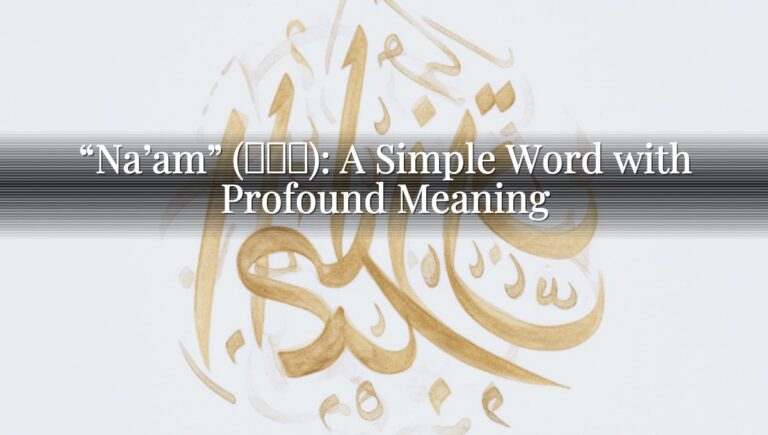
Afwan meaning in Islam: Mercy, etiquette, and a heartfelt response
Quick Answer: Afwan meaning in islam is commonly used to convey “you’re welcome,” “no problem,” or “forgive me / it’s fine,” depending on the situation. It reflects politeness and mercy in everyday speech—especially when responding to thanks, acknowledging mistakes, or encouraging good relations—grounded in Islamic values of compassion and accountability.
If you’ve heard the Arabic word afwan in Muslim conversations, you may wonder about its deeper tone and everyday meaning. In most contexts, afwan meaning in islam points to mercy, ease, and goodwill—whether someone says it after you thank them, or you hear it as a gentle response to an apology. According to mainstream Islamic teaching, language in worship and daily life is meant to soften hearts, avoid harshness, and encourage dignity in relationships. The Quran repeatedly emphasizes treating parents with noble words, speaking with peace, and responding with forgiveness when people fall short. By reflecting on these values, you can understand why Muslims use this word not just as a translation, but as etiquette that carries compassion.
At a Glance — Verses in This Article
Quran 2:286
Quran 17:23
Quran 21:83
Quran 25:63
Quran 28:23
Quran 46:15
Quran 50:16
Quran Verses
Quran 2:286 (Saheeh International)
“Allah does not charge a soul except [with that within] its capacity. It will have [the consequence of] what [good] it has gained, and it will bear [the consequence of] what [evil] it has earned. "Our Lord, do not impose blame upon us if we have forgotten or erred. Our Lord, and lay not upon us a burden like that which You laid upon those before us. Our Lord, and burden us not with that which we have no ability to bear. And pardon us; and forgive us; and have mercy upon us. You are our protector, so give us victory over the disbelieving people."”
This verse highlights accountability and mercy—encouraging forgiveness and pardon after human error, which aligns with the spirit behind saying afwan in apologetic moments.
Quran 17:23 (Saheeh International)
“And your Lord has decreed that you not worship except Him, and to parents, good treatment. Whether one or both of them reach old age [while] with you, say not to them [so much as], "uff," and do not repel them but speak to them a noble word.”
It instructs believers to avoid harsh speech and speak with a noble word to parents, reflecting the gentleness that afwan often expresses.
Quran 21:83 (Saheeh International)
“And [mention] Job, when he called to his Lord, "Indeed, adversity has touched me, and you are the Most Merciful of the merciful."”
It shows how a believer responds to distress with humility and trust in God’s mercy, echoing the comforting intention behind words like afwan.
“And the servants of the Most Merciful are those who walk upon the earth easily, and when the ignorant address them [harshly], they say [words of] peace,”
It describes believers responding to ignorance with words of peace, which supports using calm, non-confrontational replies such as afwan.
Quran 28:23 (Saheeh International)
“And when he came to the well of Madyan, he found there a crowd of people watering [their flocks], and he found aside from them two women driving back [their flocks]. He said, "What is your circumstance?" They said, "We do not water until the shepherds dispatch [their flocks]; and our father is an old man."”
It illustrates respectful inquiry and patience in dealing with others, matching the courteous tone of everyday Islamic speech like afwan.
Quran 46:15 (Saheeh International)
“And We have enjoined upon man, to his parents, good treatment. His mother carried him with hardship and gave birth to him with hardship, and his gestation and weaning [period] is thirty months. [He grows] until, when he reaches maturity and reaches [the age of] forty years, he says, "My Lord, enable me to be grateful for Your favor which You have bestowed upon me and upon my parents and to work righteousness of which You will approve and make righteous for me my offspring. Indeed, I have repented to You, and indeed, I am of the Muslims."”
It emphasizes gratitude, repentance, and making righteous choices—values that make forgiving, easygoing language (afwan) meaningful.
Quran 50:16 (Saheeh International)
“And We have already created man and know what his soul whispers to him, and We are closer to him than [his] jugular vein”
It reminds us God is closer than the jugular vein and fully aware of what the soul whispers, encouraging sincerity—so “afwan” is best said with genuine warmth.
What “afwan” usually means in daily Muslim speech
In everyday conversation, many Muslims use afwan to communicate one of two common ideas: (1) “you’re welcome / it’s no problem,” and (2) “forgive me / don’t worry,” especially after someone apologizes or feels embarrassed. Because it’s a short word, it travels quickly in greetings, service situations, and misunderstandings—yet it carries a moral intention: to keep interactions respectful and light.
Mainstream Islamic teaching emphasizes that good manners are part of faith in practice. The Quran repeatedly links religious character with speech that is gentle rather than sharp. For example, believers are instructed not to respond with rudeness, even in challenging family settings; instead, they should speak “a noble word.” That principle connects with the social purpose of afwan: to reduce tension and avoid escalating emotion.
At the same time, Islamic spirituality doesn’t deny accountability. People make mistakes, and the Quran teaches believers to seek forgiveness and mercy for themselves and others. When afwan is used as “no problem” or “it’s okay,” it can function as a social form of that mercy—helping the other person feel safe to move forward.
In other words, afwan meaning in islam is less about a literal translation and more about a tone: soothing hearts, maintaining dignity, and encouraging reconciliation. Even the smallest words matter, because Islam treats language as a vehicle for inner sincerity—God knows what the soul whispers—so afwan is best offered with genuine warmth rather than a mechanical response.
Afwan and forgiveness: mercy without pretending nothing happened
A helpful way to understand afwan is to see it as “mercy with clear boundaries.” In many situations, it is not a denial of wrongdoing; rather, it is a compassionate response that helps relationships heal.
The Quran teaches that humans are limited and are held accountable in accordance with capacity. It also teaches a specific posture after error: asking Allah to pardon, forgive, and have mercy. This spiritual model shapes how Muslims often talk when they or others are at fault. When someone says “afwan” after an apology, the intention is commonly: “You don’t need to carry this burden alone—let’s resolve it peacefully.”
This aligns with Quranic guidance about responding to difficult moments without harshness. The Quran describes believers as those who, when addressed harshly or ignorantly, reply with words of peace rather than retaliation. Afwan fits naturally into that pattern: it’s a de-escalating response that protects the dignity of both sides.
Importantly, mercy should not erase responsibility. Mainstream Islamic understanding holds that reconciliation happens while maintaining moral awareness. If a misunderstanding requires clarification, afwan may open the door—but the follow-up may still include honest communication and sincere effort to improve. In that sense, afwan can be a first step in repair.
Also, Islamic reflection encourages humility in distress. When prophets and righteous people call upon God in hardship, they do so with recognition of God’s mercy. That same comforting spirit can appear in speech: afwan becomes a small reminder that people can be forgiven, corrected, and restored—without losing compassion.
How to use afwan respectfully (and when not to)
Using afwan well depends on context and sincerity. In practical terms, many Muslims say afwan when someone thanks them for a service (like returning something, offering help, or completing a task). It signals, “You’re welcome—please don’t make it a big deal.”
Afwan is also common as a gentle response when someone apologizes, looks embarrassed, or worries they inconvenienced you. In that moment, it helps the person relax and lowers the emotional temperature.
However, Islamic manners also include appropriate clarity. If the other person’s apology points to a real issue that still needs resolution—such as repeated disrespect or a serious mistake—then afwan alone may not be enough. Many Muslims would pair a comforting response with honesty: “I understand; here’s what happened; let’s correct it.” This keeps mercy connected to justice.
The Quran emphasizes noble speech and peaceful responses. That means the tone behind afwan should be calm, not sarcastic, and not dismissive. Saying afwan with a dry or mocking voice can unintentionally communicate the opposite of mercy.
Finally, because God is aware of what is inside the person’s soul, it’s good to say afwan with sincerity rather than as a habitless phrase. If you truly feel indifferent, you may instead respond with kind clarification—something like “No worries, thank you,” or “I appreciate your apology; let’s talk.”
A simple guide for using afwan in real conversations
Here’s a practical approach you can use right away—whether you’re Muslim or learning respectfully.
1) When someone thanks you
– A common response is afwan (often meaning “you’re welcome / no problem”).
– Keep it warm and brief. The goal is to reduce awkwardness.
2) When someone apologizes
– If the apology feels genuine, you can respond with afwan to ease the person’s worry and open the path to reconciliation.
– If clarification is needed, add it kindly: “It’s okay—let’s explain so we understand each other.”
3) If someone speaks harshly
– The Quran emphasizes words of peace. If you’re tempted to reply sharply, pause and choose a gentle response.
– Afwan can be a quick “cool down” word, especially when the other person is emotional.
4) If the issue is serious or repeated
– Afwan alone may not repair the situation.
– Combine mercy with accountability: accept the apology, set expectations, and work toward a sincere change.
5) For non-Muslims (learning etiquette)
– It’s respectful to use afwan with the right tone: calm, sincere, and not ironic.
– Even if you’re not fully aware of every nuance, your respectful intent matters. Over time, you’ll learn how locals use it in different communities.
Overall, think of afwan as etiquette with mercy—a word that helps people leave conversations with dignity rather than defensiveness.
Frequently Asked Questions
What is afwan meaning in Islamic etiquette?
Afwan meaning in Islamic etiquette is usually a polite, reassuring response—often “you’re welcome” or “no problem,” and sometimes “don’t worry” after an apology. It reflects a compassionate tone that avoids harshness and supports respectful relationships.
What does afwan mean when someone says sorry?
When someone apologizes, afwan often communicates reassurance: “It’s okay,” “there’s no need to feel burdened,” or “forgive the situation.” Many Muslims pair it with peaceful acceptance, and if needed, follow it with gentle clarification.
How should I respond when someone says afwan to me?
Commonly, you can respond with “thank you,” “jazak Allah khair” (if you’re comfortable), or simply “no problem” or “thank you for your kindness.” If the afwan was after your apology, you may add, “I appreciate your understanding,” and move toward resolution.
Is afwan response to thank you in Islam always the same?
It’s similar in spirit—reassuring and polite—but wording can vary by community and context. Most of the time, afwan after thanks means “you’re welcome.” The key is the intent: keep the interaction humble, peaceful, and warm.
Key Takeaway: Afwan meaning in islam is best understood as mercy-filled etiquette—gentle words that soothe hearts, encourage forgiveness, and help relationships move forward peacefully.
This article offers general information for educational purposes
and reflects mainstream Islamic teaching. It is not a religious ruling (fatwa). For guidance on
your specific situation, consult a qualified local scholar or imam.