Arabic Alphabet Letters Worksheet: A Practical Approach to Learning
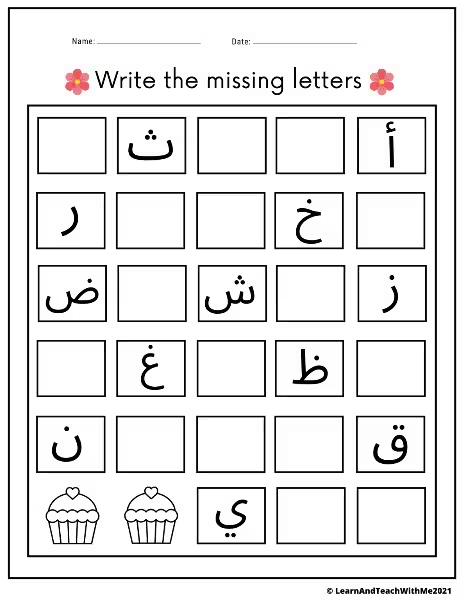
Learning the Arabic alphabet can seem daunting, but with the right tools, it can be an engaging and rewarding experience. This article explores the benefits of using Arabic alphabet letters worksheets, focusing on a practical and effective approach, especially for children. We’ll delve into the methodology, benefits, and considerations for using these resources.
Arabic script differs significantly from Roman alphabets, requiring a unique approach to learning. Traditional methods, while valuable, can sometimes feel abstract and challenging. Arabic alphabet letters worksheet, offering a practical and visual method, prove particularly useful for beginners. The visual nature of these resources provides a concrete foundation for understanding the shape and sequence of letters. These resources utilize the proven principle of visual-motor learning, which helps students internalize the patterns of the letters.
This visual-motor learning principle is best exemplified by the use of tracing and joining dots. This process reinforces spatial awareness and fine motor skills, crucial development stages for children. It transforms the abstract concept of letter formation into a hands-on activity that is fun and engaging. Furthermore, the structured nature of the exercises provides students with a clear path to mastery.
The Advantages of Arabic Alphabet Letters Worksheet
Employing Arabic alphabet letters worksheet offers numerous advantages in the learning process:
Hands-on learning: The act of joining dots encourages active participation and tactile engagement.
Visual reinforcement: The visual cues of the dots guide the student’s hand, ensuring proper letter formation.
Gradual development: The step-by-step nature of the exercises allows for a gradual progression from simple to complex letter structures.
Improved fine motor skills: Tracing and joining dots strengthen hand-eye coordination and fine motor control, crucial skills for other academic pursuits.
Enhanced focus and concentration: The focused nature of tracing letters cultivates concentration and patience, important traits for lifelong learning.
Accessible and affordable: Many resources are freely available online or in printable formats, making them accessible to diverse learners.
These advantages make the Arabic alphabet letters worksheet a valuable supplement to traditional classroom learning or a helpful tool for parents looking to support their child’s Arabic language education.
The beauty of using Arabic alphabet letters worksheet lies in their adaptability. They can be tailored to meet the unique needs of each student. For example:
Differentiated instruction: Worksheets can be modified to cater to varying skill levels. Simpler worksheets with fewer dots can be used for beginners, while more complex ones with intricate letter structures can challenge advanced learners.
Personalized practice: Worksheets can be used as supplementary practice materials to reinforce concepts learned in the classroom or at home.
Engaging activities: The worksheets can be combined with other learning activities, such as coloring, storytelling, or pronunciation practice, to make the learning process more engaging.
Creative exploration: Students can use the worksheets to create their own stories or drawings, allowing them to express themselves creatively while simultaneously practicing their Arabic alphabet skills.
By adapting the worksheet format, educators and parents can significantly enhance the learning experience for children, fostering a deep understanding of the Arabic alphabet.
Integrating Technology for Enhanced Learning
The modern learning environment embraces technology. How can Arabic alphabet letters worksheet integrate with digital tools?
Interactive online resources: Several websites and apps offer interactive Arabic alphabet letters worksheets, allowing children to practice writing letters in a dynamic and engaging way.
Digital flashcards: Digital flashcards, which can be created from the worksheet templates, can be used to reinforce letter recognition and pronunciation.
Educational games: Digital games can be designed around the letter formation practice, turning a potentially tedious task into a fun, interactive experience.
By incorporating technology effectively, educational resources like Arabic alphabet letters worksheet can keep pace with the needs of modern learners and enhance the learning process in a dynamic way.
The Importance of Consistent Practice
The effectiveness of using Arabic alphabet letters worksheet relies on consistent practice. Regular engagement with the material is crucial for consolidating the learning. Parents and educators can employ various strategies to maintain consistency:
Dedicated practice time: Scheduling specific time for practicing letter formation on worksheets can make the process more manageable and effective.
Reinforcing activities: Integrating the learned letters into other activities, like writing simple sentences or drawing pictures, can provide reinforcement opportunities.
Positive feedback and reinforcement: Encouraging and praising progress can motivate learners and maintain their enthusiasm for practicing letter formation.
By consistently integrating Arabic alphabet letters worksheet into learning activities, students can build confidence in their skills and develop a solid foundation for their Arabic language learning journey.
Arabic alphabet letters worksheet represent a valuable, practical, and engaging tool for learning the Arabic alphabet. Their adaptability, visual focus, and emphasis on fine motor skills make them a powerful asset for educators and parents alike. By incorporating these resources into a broader learning framework, learners can develop a solid foundation in Arabic script that enhances their overall Arabic language journey. By employing this practical methodology, learners can acquire a meaningful understanding and appreciation for the beauty and complexity of the Arabic alphabet.
Arabic Alphabet Letters Worksheet FAQ
This FAQ section addresses common questions about the “Arabic Letter Formation – Iqra Games” worksheet.
What is the purpose of the Arabic Letter Formation worksheets?
The worksheets are an educational tool designed to teach children the formation of Arabic alphabet letters. They aim to introduce Arabic script in an engaging way, focusing on visual and hands-on learning.
What method do the worksheets use to teach letter formation?
The worksheets use a point-connecting method. Children connect the dots to follow the sequence and shape of each letter. This approach is effective for developing fine motor skills and spatial reasoning, particularly in young learners.
Why is the point-connecting method used for learning Arabic letters?
This method provides a concrete and gradual approach to learning Arabic script. Instead of presenting letters abstractly, it visually illustrates their composition by connecting points, helping children understand the sequence of strokes and movements needed for each letter.
Are the worksheets suitable for different learning levels?
Yes, the simplicity of the point-connecting method makes the worksheets accessible to children of varying skill levels. They are a versatile tool for both educational settings and home use.
Are the worksheets printable and free?
Yes, the worksheets are provided as printable materials and are free to access, making them accessible to educators and parents seeking to enhance their children’s Arabic language education.
How does the point-connecting method aid in learning?
The repetitive nature of connecting points helps children internalize the required movements for forming each letter. This visual and tactile repetition aids in memorization and reinforces the correct letter formation.
What skills are developed through using these worksheets?
The worksheets promote fine motor skills, hand-eye coordination, and concentration, which are essential for a child’s overall development. They also help cultivate patience, a crucial skill for any learning process.
Can the worksheets be customized for individual needs?
Yes, the worksheets can be adapted to meet the individual needs of children. They can be used in both school and home environments to supplement the learning of the Arabic alphabet.
Is repetition important for learning Arabic letters using the worksheets?
Yes, the method relies on repetition. By connecting the dots, children repeatedly practice the movements required to form each letter, which is crucial for learning and memorization.
Are there other methods of practice beyond the worksheets?
While the point-connecting method is effective, the worksheets are best used in conjunction with other practice methods and reinforcement activities to ensure a deeper understanding of the Arabic alphabet.
How do the worksheets relate to other learning styles?
The visual and tactile nature of the worksheets cater to multiple learning styles, making the process of learning Arabic letters more engaging and effective.
Can these worksheets be used in a classroom setting?
Absolutely, the worksheets can be seamlessly integrated into a classroom curriculum to complement other Arabic language learning activities.
What age groups are these worksheets suitable for?
The worksheets are generally suitable for younger children, particularly those in early childhood education or elementary school, as they focus on developing fine motor skills.
How can parents use these worksheets at home?
Parents can use the worksheets to supplement their children’s Arabic learning at home, reinforcing concepts learned in school or enhancing independent learning.
What is the benefit of combining the worksheets with other learning resources?
Combining the worksheets with other teaching methods (e.g., flashcards, phonics, or interactive games) provides a more comprehensive learning experience, aiding in better retention and understanding of Arabic letters.
How can I get access to these printable worksheets?
Unfortunately, this information is not provided in this text, and I lack the ability to access external websites or files.