Dua for Going Outside: Turning Daily Steps into Worship
Quick Answer: A common way to seek Allah’s help when leaving is to make a sincere, spoken **dua for going outside** right before stepping out—thanking Him, asking for protection, guidance, and good conduct. In mainstream Islamic practice, the best dua is whatever is heartfelt and appropriate, paired with good etiquette as you transition from home to the public world.
Stepping outside is a simple moment, yet it’s also a doorway to responsibility—meeting people, dealing with environments we can’t control, and keeping our character aligned with faith. Many Muslims understand that making a dua for going outside helps turn an ordinary errand into remembrance and reliance on Allah. Even for non-Muslims, this practice can be appreciated as respectful spiritual mindfulness: we begin with gratitude, ask for protection, and commit to good manners.
Islamic teaching also emphasizes how we relate to others—especially within the home—through humility and kindness. As you move from your private space into public life, you can carry that same softness with you, remembering that Allah sees your choices at every step. The goal is not magic words, but sincere dependence and good etiquette as you go.
At a Glance — Verses in This Article
Quran 17:23-24
Quran 24:27
Quran 24:58
Quran 28:77
Quran 2:286
Quran 5:6
Quran 2:125
Quran 20:114
Quran Verses
Quran 17:23-24 (Saheeh International)
“And your Lord has decreed that you not worship except Him, and to parents, good treatment. Whether one or both of them reach old age [while] with you, say not to them [so much as], "uff," and do not repel them but speak to them a noble word. And lower to them the wing of humility out of mercy and say, "My Lord, have mercy upon them as they brought me up [when I was] small."”
These verses stress gentle speech and mercy toward parents, reminding us to carry compassionate conduct when we leave home.
Quran 24:27 (Saheeh International)
“O you who have believed, do not enter houses other than your own houses until you ascertain welcome and greet their inhabitants. That is best for you; perhaps you will be reminded.”
This verse teaches seeking permission, confirming welcome, and greeting others—principles that shape respectful behavior outside the home.
Quran 24:58 (Saheeh International)
“O you who have believed, let those whom your right hands possess and those who have not [yet] reached puberty among you ask permission of you [before entering] at three times: before the dawn prayer and when you put aside your clothing [for rest] at noon and after the night prayer. [These are] three times of privacy for you. There is no blame upon you nor upon them beyond these [periods], for they continually circulate among you – some of you, among others. Thus does Allah make clear to you the verses; and Allah is Knowing and Wise.”
The verse highlights privacy and asking permission at set times, reinforcing mindful boundaries and respectful social behavior.
Quran 28:77 (Saheeh International)
“But seek, through that which Allah has given you, the home of the Hereafter; and [yet], do not forget your share of the world. And do good as Allah has done good to you. And desire not corruption in the land. Indeed, Allah does not like corrupters."”
It encourages balancing worldly life with seeking the Hereafter, grounding everyday outings in a higher purpose.
Quran 2:286 (Saheeh International)
“Allah does not charge a soul except [with that within] its capacity. It will have [the consequence of] what [good] it has gained, and it will bear [the consequence of] what [evil] it has earned. "Our Lord, do not impose blame upon us if we have forgotten or erred. Our Lord, and lay not upon us a burden like that which You laid upon those before us. Our Lord, and burden us not with that which we have no ability to bear. And pardon us; and forgive us; and have mercy upon us. You are our protector, so give us victory over the disbelieving people."”
This includes a heartfelt supplication asking Allah for forgiveness and mercy, which can guide the spirit of any dua before going out.
Quran 5:6 (Saheeh International)
“O you who have believed, when you rise to [perform] prayer, wash your faces and your forearms to the elbows and wipe over your heads and wash your feet to the ankles. And if you are in a state of janabah, then purify yourselves. But if you are ill or on a journey or one of you comes from the place of relieving himself or you have contacted women and do not find water, then seek clean earth and wipe over your faces and hands with it. Allah does not intend to make difficulty for you, but He intends to purify you and complete His favor upon you that you may be grateful.”
It links worship to purification, reminding us that cleanliness and spiritual readiness can accompany our daily movements.
Quran 2:125 (Saheeh International)
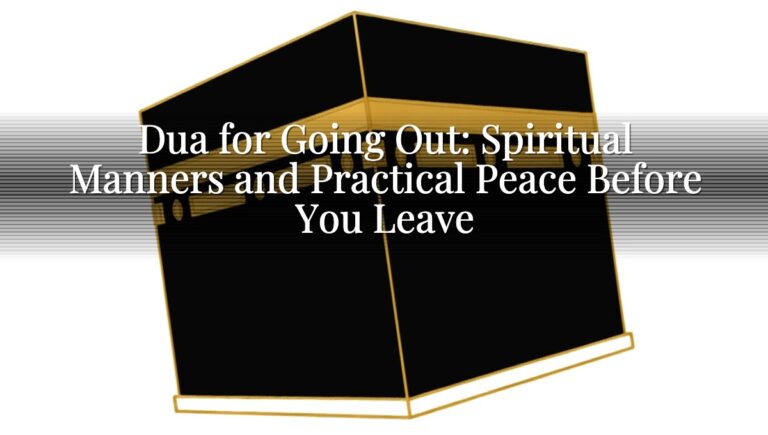
“And [mention] when We made the House a place of return for the people and [a place of] security. And take, [O believers], from the standing place of Abraham a place of prayer. And We charged Abraham and Ishmael, [saying], "Purify My House for those who perform Tawaf and those who are staying [there] for worship and those who bow and prostrate [in prayer]."”
Purifying Allah’s House for worship reflects a broader ethic: intention matters and we should keep our actions sincere.
Quran 20:114 (Saheeh International)
“So high [above all] is Allah, the Sovereign, the Truth. And, [O Muhammad], do not hasten with [recitation of] the Qur'an before its revelation is completed to you, and say, "My Lord, increase me in knowledge."”
This verse highlights asking Allah to increase knowledge, encouraging reflective dua that improves how we live, not just where we go.
Why make a dua before stepping out?
Mainstream Islamic teaching encourages believers to begin matters with remembrance and sincere reliance on Allah, especially when stepping into a wider world. Leaving the house can expose us to distractions, temptations, and unforeseen interactions. A prayer when leaving the house becomes a quick spiritual anchor: “Ya Allah, protect me, guide me, and help me use this time for what pleases You.”
The Quran reminds us that our choices are never empty. One verse says to seek, through Allah’s gifts, “the home of the Hereafter,” while not neglecting our share of the world. That means an errand, a walk, or commuting can be turned into worship through right intention and right conduct. Another verse teaches a comprehensive dua for forgiveness, mercy, and strength to handle life’s burdens—an attitude that fits perfectly before going out: we admit our limits and ask for Allah’s support.
Also, Islamic practice values readiness for worship. Before prayer, purification is commanded; many Muslims extend the spirit of this by being clean and composed before leaving, so the body and mind are settled. If you can, approach your supplication before stepping outside with calm: fresh water, tidy clothing, and a focused intention.
Finally, dua isn’t only about safety. It’s also about character. When you carry humility and mercy—especially toward people connected to your home—you build a consistent spiritual life. In that sense, the “dua” is both words and behavior: what you ask for should appear in how you speak, walk, and treat others once you’re outside.
Respect, boundaries, and manners as part of going out
Islamic etiquette is not limited to formal gatherings; it travels with you into daily spaces. Quran 24:27 teaches that believers should not enter houses other than their own until they ascertain welcome and greet their inhabitants. This is a clear reminder that outside your home, social interactions require clarity and good manners—not assumptions.
Similarly, Quran 24:58 emphasizes permission and privacy at specific times. While it addresses household practice, its broader lesson is widely understood: respect boundaries and avoid intrusion. When you go outside—whether visiting relatives, dropping by a neighbor, or meeting someone—think of this ethic: Are you entering in a way that’s considerate? Have you checked the situation? Are you giving people the dignity of consent and comfort?
And because going out often follows family moments, Quran 17:23-24 matters. It calls for gentle, noble speech toward parents, including not using harsh words and maintaining humility and mercy. Many Muslims understand this to mean: even if you’re rushing, you don’t let stress make your speech sharp. A dhikr for leaving home can begin with a moment of appreciation—“May Allah bless my parents,” or “May Allah soften my heart”—then continue with respectful words before you step out.
Taken together, these teachings shape a practical view: your dua for going outside is strengthened by how you treat people. If your prayer is “protect me,” pair it with “act carefully.” If your prayer is “guide me,” pair it with “greet others, ask permission, and respect boundaries.” That combination turns daily movement into worship.
Keeping worldly life in balance with the Hereafter
Another reason dua fits naturally when leaving home is that daily life can easily become only “about the world.” The Quran asks believers to seek through what Allah has given them “the home of the Hereafter” and not forget their share of the world. This creates a balanced mindset for outings: go out to work, learn, and serve—yet keep your heart connected to accountability.
In practice, many people find it helpful to frame their outing with two intentions. First: “This time is a trust.” Second: “I want to come back with benefit.” Before you step outside, take a breath and ask Allah for two things: protection from harm and protection of your character (your speech, your gaze, your honesty).
The Quran also includes a powerful request for Allah to forgive, have mercy, and help believers overcome weakness. That means your dua can include confession without despair: you’re asking Allah to cover your shortcomings and make you steady. When you leave, it’s easy to feel small against the complexity of life. A dua for going out safely can therefore be both emotional and practical: Allah is asked to guard you, and you commit to careful steps.
Finally, asking for increased knowledge is a Quranic attitude. Many Muslims understand it as: every day offers lessons, and good outings can teach us. If your trip includes studying, teaching, helping someone, or even listening respectfully, you can pray that Allah increases you in wisdom—so the outing becomes a source of growth, not just movement.
Here’s a practical, Quran-aligned routine many Muslims use as a way to keep leaving the home spiritually grounded.
1) Before you step out, pause for a sincere moment. Make a short personal dua that fits your situation. For example: thank Allah, ask for protection, ask for guidance in manners and speech, and ask that your time be beneficial. You don’t need special wording—what matters is sincerity.
2) Keep your body and mind ready. Mainstream Islamic practice connects worship with purification. Even outside formal prayer, aim for cleanliness and a calm state. If you’re in a condition that requires ritual purification before prayer, be mindful to address it as part of your day, not as an afterthought.
3) Carry family mercy into the street. If you’re leaving after interacting with parents or family, remember the Quran’s call for gentle speech and humility. Quick check-in: avoid harsh words when you’re late; say something noble and respectful.
4) Respect people and boundaries as you go out. If you’re visiting, follow the Quran’s guidance on seeking welcome and greeting others. If entering someone’s space, be considerate—don’t assume permission.
5) Make your intention explicit: world with the Hereafter. Remind yourself of the Quran’s balance: seek Allah’s pleasure through what He has provided. Then your outing becomes purposeful—work, learning, and helping others—wrapped in the right spirit.
This routine supports your prayer when leaving the house by pairing words with ethics. Ultimately, the best dua is the one that changes how you act once you’re out the door.
Frequently Asked Questions
What is the best dua for going outside before leaving home?
In mainstream Islamic understanding, the most meaningful **dua for going outside** is a sincere, situation-appropriate supplication: thank Allah, ask for protection, guidance, and good conduct, and ask that your time be beneficial. If you’re unsure, keep it simple and ask Allah for safety of heart, speech, and actions.
Can I make a prayer when leaving the house even if I’m just going on an errand?
Yes. Quran 28:77 encourages balancing worldly life with the Hereafter, so even small errands can be turned into worship through intention and dua. A short moment of remembrance before stepping out is a respectful way to keep your purpose aligned.
How do Quran teachings about manners apply to going outside?
Quran 24:27 and 24:58 highlight respectful boundaries: confirm welcome, greet people, and avoid intrusion. When you go out—visiting, meeting, or entering spaces—follow that ethic through asking permission and speaking kindly.
Is there a specific way to say a dhikr for leaving home?
Many Muslims choose brief remembrance based on personal need—protection, gratitude, or guidance—then carry it into their actions. The key is sincerity and consistency: your remembrance should show up in respectful speech, humility, and careful behavior while you’re outside.
Key Takeaway: A heartfelt **dua for going outside** becomes most powerful when it’s paired with cleanliness, respectful manners, and a sincere intention to serve Allah in everyday life.
This article offers general information for educational purposes
and reflects mainstream Islamic teaching. It is not a religious ruling (fatwa). For guidance on
your specific situation, consult a qualified local scholar or imam.