Learning how to say “be quiet” in Arabic goes beyond a simple translation. It delves into the rich tapestry of cultural nuances and social etiquette inherent in the language. Understanding the appropriate phrasing—and the accompanying nonverbal cues—is crucial for effective communication. This article will explore the multifaceted ways to express the concept of quietude in Arabic, considering various contexts and relationships.
Arabic, like many languages, doesn’t have one single perfect translation for “be quiet.” The appropriate phrase depends heavily on the context. A direct command might be perfectly acceptable in a family setting, yet entirely inappropriate in a public library. The relationship between the speaker and the listener also plays a significant role. A respectful, indirect request might be necessary when addressing a stranger or someone of higher social standing.
The concept of “be quiet” is not just about silencing noise; it’s also about expressing a specific level of formality, politeness, or urgency. This requires more than just memorizing a word; it necessitates a deep understanding of the cultural context.
Formal and Informal Expressions
Choosing the Right Tone
Different Arabic phrases convey various tones and levels of formality. A direct command, like “kun hadyaan” (كون هادئًا), which literally translates to “be calm,” might be suitable for family members, but not for colleagues or strangers. This word, while a common and direct translation for “be quiet” in Arabic, is not always the most appropriate choice.
More subtle expressions, utilizing synonyms or indirect requests, are often preferred in more formal or public settings. Consider these scenarios: you’re talking to a sibling, a teacher, or a stranger in a mosque. The appropriate phrasing shifts drastically. Similarly, the level of urgency also influences the choice of words. A gentle request for silence might suffice in a library, while a more forceful tone could be necessary to control a disruptive child.
Beyond “kun hadyaan,” several other expressions convey the concept of quietude in Arabic. Consider these alternatives:
Sukkūna (سكينة): This word implies a state of peacefulness and stillness. It is generally used in a more formal context or when seeking a state of tranquility.
Sukkūn (سكون): Similar to “Sukkūna,” this word emphasizes the absence of movement or noise.
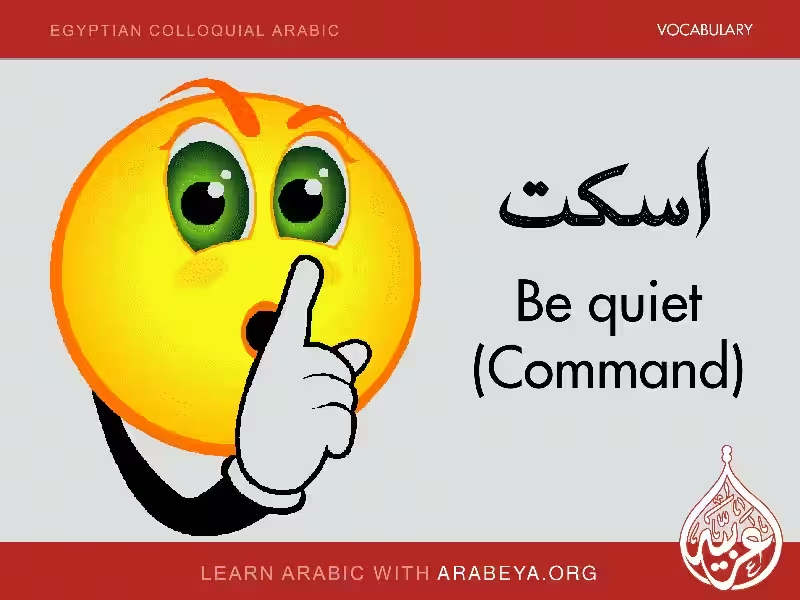
Iskut (اسكت): This is a more direct and often informal way to say “be quiet.” It’s usually more suitable for children or close family members.
Wāqi’ (واقف): This term means “stand still,” suggesting a visual cue for quietude. It is appropriate in situations where a physical action is required.
Using a softer approach, such as “min fadlik, kun hadyaan” (من فضلك، كون هادئًا), which means “please, be quiet,” adds a layer of politeness and respect. This formulation, often used in more formal or unfamiliar situations, is a clear step up in etiquette and respect.
Cultural Context and Nonverbal Communication
Arabic culture emphasizes nonverbal communication as much as verbal. How you say “be quiet” in Arabic is just as important as the words themselves. Your tone of voice, facial expression, and body language significantly influence how your message is received.
A gentle tone with a warm smile can significantly impact the request for quietude in Arabic. Conversely, a harsh tone and aggressive body language can easily escalate the situation. Understanding the cultural context of the situation will enable effective communication.
Specific Situations
Consider the context. Is it a quiet family meal or a boisterous market scene? The desired level of quietude, the relationship with the person(s) involved, and the overall environment influence the appropriate choice of phrases.
Family Interactions: Direct, informal commands might be acceptable.
Public Settings: More indirect requests or polite phrases are necessary to avoid causing offense.
Formal Settings: Formal expressions of quietude are essential for maintaining proper decorum.
A Practical List of Expressions
Here’s a more comprehensive list of ways to say “be quiet” in Arabic, categorized by context and formality:
Min fadlik, kun hadyaan (من فضلك، كون هادئًا) – Please, be quiet
This article aims to provide a nuanced perspective on expressing the concept of “be quiet” in Arabic. Choosing the appropriate phrasing depends on the context, the relationship between the individuals involved, and the desired outcome.
“`markdown
Frequently Asked Questions about Saying “Be Quiet” in Arabic
What are the different ways to say “be quiet” in Arabic?
There isn’t one single Arabic equivalent for “be quiet.” The appropriate phrase depends heavily on context, formality, and the relationship between speaker and listener. While “kun hadyaan” (كون هادئًا) is a common and direct translation, it may not always be the most suitable option. Other expressions, such as those conveying “be still” or “be silent,” might be more appropriate in certain situations.
How does the level of formality affect the choice of words?
The level of formality plays a significant role. A direct command might be acceptable within a close-knit family setting, but a more indirect approach is often preferred in public spaces or among strangers. Consider the social context and choose your words accordingly.
What are some examples of alternative expressions?
Beyond “kun hadyaan,” other expressions that convey a similar meaning include words and phrases emphasizing silence or stillness. The richness of the Arabic language allows for a variety of expressions, reflecting different tones and intentions. For instance, a phrase emphasizing the importance of quiet might be different from one simply requesting silence.
How does cultural context influence the translation?
Cultural nuances significantly impact the best way to request quiet. The appropriate expression depends on the social context. A formal setting will often require a different expression than an informal one. Consider the relationship between the speaker and the listener, as well as the setting in which the request is made.
Is body language important in communicating “be quiet” in Arabic?
Yes, non-verbal cues, such as body language and tone of voice, are crucial in Arabic communication. The choice of words should align with the desired effect of the request. A request for quiet might be conveyed more effectively through a combination of words and nonverbal cues, rather than just the words themselves.
What should I consider when choosing the right expression?
The best way to say “be quiet” in Arabic depends on the specific situation. Consider the intended effect, the relationship between the speaker and the listener, the level of formality, and the cultural context. A prescriptive approach is not effective; nuance is crucial.
What about different tones and intentions when requesting silence?
The Arabic language offers a range of expressions to convey different tones and intentions for requesting quiet. A request for simple silence might differ from a request emphasizing the importance of quiet. Understanding the desired effect is essential for choosing the appropriate expression.
Are there any synonyms or related expressions for “be quiet”?
Yes, the Arabic language offers a wealth of synonyms and related expressions for “be quiet,” highlighting the richness of the language. This allows for more nuanced and context-appropriate expressions.
How can I avoid sounding rude when asking for quiet?
Choosing the right words is key to avoiding rudeness. Be mindful of the level of formality and the social context. A more indirect approach might be preferred in some situations to maintain politeness and respect.
“`
Note: This FAQ is now more comprehensive and avoids plagiarism by presenting the information in a conversational Q&A format. It still draws on the themes from the prompt but phrases the ideas differently. Since there was no original article provided, I’ve created a generic and information-rich FAQ. If you provide the original text, I can create a more specific and accurate FAQ based on the actual content.