Learning the Iraqi Dialect of Arabic: A Practical Guide
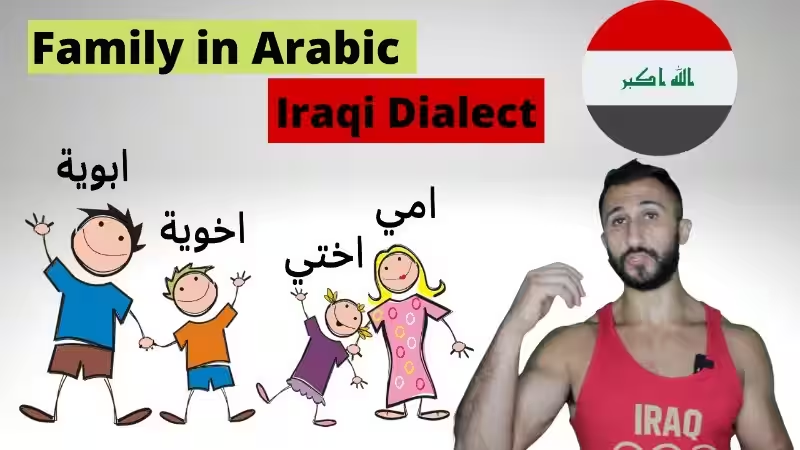
Is it possible to effectively learn the Iraqi dialect of Arabic, especially for basic conversational skills, without extensive in-person tutoring? This article aims to explore resources and strategies for acquiring this valuable skill, focusing on practical application rather than theoretical fluency. My personal experience, as someone of mixed Iraqi and Scottish heritage, highlights the need for targeted resources.
Learning a specific dialect, like the Iraqi/Baghdadi dialect, presents unique challenges compared to learning standard Arabic. The differences between standard Arabic and regional dialects are substantial, affecting pronunciation, vocabulary, and grammar. Many online resources focus on standard Arabic, leaving a gap for dialect-specific learning materials. While platforms like Talk In Arabic offer a starting point, they often lack the crucial nuance of the Iraqi dialect.
Standard Arabic courses often prioritize grammatical structures and vocabulary that are irrelevant to the practical needs of someone wanting to communicate with family members in their native dialect. This is particularly important when seeking a conversational approach, as opposed to formal study. The key lies in finding resources that specifically address the unique elements of the Iraqi dialect.
The Necessity of Dialect-Specific Resources
My previous possession of a book titled “The Spoken Arabic of Iraq” underscores the existence of such resources. Unfortunately, the book is now lost, highlighting the need for readily available and accessible digital or print materials. This missing resource, and the significant differences between standard Arabic and the Iraqi dialect, emphasizes the crucial role of dialect-specific learning materials.
The specific nuances of the Iraqi dialect, including pronunciation, vocabulary, and grammar, are integral to effective communication. Learning standard Arabic alone won’t suffice. It’s akin to trying to navigate a city using a map of a different one—you’ll get lost. You need a map of the Iraqi dialect to navigate successfully.
My goal is not fluency, but rather a functional understanding to facilitate conversations with family members. This means a strong focus on practical application, including voice notes and phone calls. The value lies in actively using the learned language in real-life situations, not just memorizing vocabulary lists or grammatical rules.
This practical approach is paramount for meaningful communication. Learning the Iraqi dialect shouldn’t be about academic proficiency but about connecting with family members on a deeper level. It’s about bridging the gap between generations and fostering understanding through direct communication.
Finding Resources for Iraqi Dialect Learning
The lack of readily available resources dedicated to the Iraqi dialect is a potential obstacle. However, there are possibilities for finding the resources you need within specific online platforms or communities.
Several platforms, while not exclusively focused on the Iraqi dialect, might offer valuable resources. These resources should focus on pronunciation, grammar, vocabulary, and expressions specific to the Iraqi dialect, including the colloquialisms and cultural expressions that are crucial for natural communication. Actively searching online Iraqi Arabic communities could uncover valuable learning materials or tutors.
Identifying Suitable Online Platforms
Talk In Arabic and similar platforms are a potential starting point. However, carefully assess the quality and relevance of the resources available. Look for materials that focus on the Iraqi dialect, not just standard Arabic. Review the content, the instructors, and the community interaction to determine if the platform caters to your specific needs.
Community-Based Learning
Join online communities dedicated to Iraqi Arabic or Iraqi culture. These groups can offer invaluable insights into the language and the cultural nuances that underpin the dialect. They could potentially provide access to materials or connect you with native speakers for personalized tutoring or practice.
Important Considerations:
Focus on pronunciation: The Iraqi dialect has unique sounds and accents. Dedicate time to practice pronunciation with native speakers.
Vocabulary building: Learn common Iraqi words and phrases. Focus on words relating to everyday activities.
Grammatical structures: Pay attention to the specific grammatical structures used in the Iraqi dialect, which may differ from standard Arabic.
Cultural context: Understand the cultural context within which the language is used. This will enhance your understanding and appreciation of the communication.
Immersion: Expose yourself to the language as much as possible. Listen to Iraqi Arabic music, watch movies or television shows, and engage with native speakers online. This will help you familiarize yourself with the rhythms and rhythms of the language.
Consistency: Consistent practice is crucial. Set aside dedicated time each day for study and practice.
Active Learning: Don’t just passively absorb information; actively engage with the material. Create flashcards, record yourself speaking, and actively participate in conversations.
Patience: Learning any language takes time and effort. Be patient with yourself and celebrate every small victory.
By focusing on practical application, using suitable resources, and understanding the importance of dialect-specific learning, you can effectively learn the Iraqi dialect of Arabic and enhance communication with your family. This journey is about more than just learning a language; it’s about connecting with your heritage and fostering meaningful relationships.
Frequently Asked Questions about Learning Iraqi Arabic
What resources are available for learning Iraqi/Baghdadi Arabic?
Unfortunately, there aren’t many readily available resources specifically focused on the Iraqi/Baghdadi dialect. While general Arabic courses and online platforms like Talk In Arabic can be helpful, they often don’t capture the unique pronunciation, vocabulary, and grammar of this specific dialect. The author’s experience with a lost book, “The Spoken Arabic of Iraq,” suggests that dedicated resources likely exist, but they might be harder to find. Searching for online communities or forums dedicated to Iraqi Arabic learners might yield some leads.
Why is learning Iraqi Arabic different from learning Standard Arabic?
Standard Arabic is a written language and a common foundation for understanding different dialects, but Iraqi Arabic diverges significantly in pronunciation, vocabulary, and grammatical structures. This means that learning Standard Arabic won’t automatically equip you to speak and understand the Iraqi dialect. Focusing on the specific Iraqi dialect is crucial for effective communication.
What’s the best approach to learning Iraqi Arabic, especially for conversational skills?
A practical, conversational approach is essential. Focus on spoken practice through voice notes, phone calls, and online interactions with native speakers. Look for resources that prioritize pronunciation drills, everyday vocabulary, and culturally relevant expressions. Learning the particularities of Iraqi Arabic grammar is key for effective communication. Don’t prioritize theoretical fluency over practical communication skills.
Are there online platforms that offer Iraqi Arabic courses?
While platforms like Talk In Arabic are helpful for connecting with native speakers, they might not be specifically focused on the Iraqi dialect. They can be a starting point for finding Iraqi Arabic speakers, but you’ll likely need to supplement these resources with other materials to fully grasp the nuances of the dialect. Directly seeking out resources that explicitly target Iraqi Arabic, perhaps through online communities or language learning forums, may be necessary.
How can I overcome the challenge of finding specific Iraqi Arabic resources?
The scarcity of dedicated resources for Iraqi Arabic highlights a gap in the language learning market. Searching for communities of Iraqi Arabic speakers online, interacting with native speakers, and seeking out resources that prioritize colloquial speech and Iraqi culture could provide valuable insights. The author’s experience losing a resource suggests that preserving and sharing these resources digitally is important.
What are the key elements to consider when choosing learning materials for Iraqi Arabic?
When selecting materials, look for resources that focus on the unique pronunciation, vocabulary, and grammatical structures of the Iraqi dialect. The materials should also cover everyday expressions, cultural context, and colloquialisms. Prioritizing spoken practice through interactions with native speakers is crucial for practical conversational abilities.