How to Say “Where Are You From?” in Arabic: A Guide for Language Learners
Learning a new language isn’t just about memorizing words; it’s about understanding the nuances of communication. One crucial aspect of any language is how to ask fundamental questions like, “Where are you from?”. This article provides a comprehensive approach to expressing this query in Arabic, considering various levels of formality and regional differences.
Arabic, like many languages, has different ways of asking the same question depending on the situation. The level of formality is crucial. Are you speaking to a close friend, a stranger, or someone in a professional setting? This impacts the phrasing you use. Similarly, regional variations exist. While the core meaning remains the same, the specific words used might differ slightly in different Arab countries.
Choosing the Right Level of Formality
Knowing your audience is key to effective communication. In formal situations, a more elaborate phrase might be appropriate. In casual settings, a more straightforward approach is acceptable. This flexibility in language use is a fundamental part of any language’s dynamic.
Formal Options:
أين أنتِ من؟ (Ayna anta min?) – This is a formal way to ask a woman “Where are you from?”
أين أنتَ من؟ (Ayna anta min?) – This is the formal way to ask a man “Where are you from?”.
Informal Options:
من وين أنت؟ (Min wayn anta?) – This is a common, informal way to ask “Where are you from?”.
من وين جاي؟ (Min wayn jay?) – A more relaxed and casual way of expressing the question, literally meaning “Where are you coming from?”.
These options offer different degrees of formality, allowing you to choose the appropriate phrasing based on your relationship with the person you’re addressing.
Understanding Regional Variations
Arabic isn’t monolithic; it encompasses various dialects. While the core vocabulary remains similar, pronunciation and specific phrases may differ across different regions of the Arab world. For example, some regions might use alternative phrasings for this question, or even different words to express the concept of “from”. It’s important to be mindful of this when communicating with someone from a different region.
Beyond the Basic Phrases: Exploring Alternative Phrasings
While the previous options are excellent for everyday use, exploring further nuances can help you engage with the language more deeply. Think about alternative ways of expressing the same concept. How might one ask “Where are you from” in a more descriptive manner?
Alternative Ways to Ask “Where Are You From?”
من أين أتيت؟ (Min ayin atee’t?) – This phrase, while slightly more formal, emphasizes the arrival aspect.
أين تقطن؟ (Ayn tuqtun?) – This translates to “Where do you live?”, which can also convey the information about their origin.
ما هو بلدك؟ (Ma huwa baladuk?) – This phrase translates to “What is your country?”.
These alternative phrases offer a more varied approach, allowing you to ask the question in different ways and showcasing a broader language repertoire.
Important Considerations for Effective Communication
Beyond the words themselves, understanding the cultural context is essential for effective communication. Being mindful of the level of formality, your tone, and body language can significantly impact your interactions.
Cultural Nuances and Considerations
Respect: Always show respect for the person you’re speaking to, regardless of the situation.
Tone: Maintain a polite and friendly tone, avoiding overly casual or overly formal language that might be perceived as inappropriate or disrespectful.
Body Language: Your body language plays a significant role in conveying your message. Maintain appropriate eye contact, use gentle gestures, and avoid any actions that might be considered offensive or culturally inappropriate.
Follow-up: Once you get a response, show genuine interest and ask follow-up questions to be a good conversationalist.
By considering these cultural factors, you can enhance your communication, fostering stronger connections and showing respect for the cultural context.
These options, combined with an understanding of regional variations and cultural nuances, provide a robust framework for asking “Where are you from?” in Arabic. Remember to adapt your language and approach based on the specific context and your relationship with the person you’re addressing. By mastering these nuances, you’ll be better equipped to navigate conversations and truly connect with Arabic speakers on a deeper level. Continuous learning and practice are key to achieving fluency and cultural understanding.
FAQ: How to Say “Where Are You From?” in Arabic
This FAQ addresses common questions about expressing “Where are you from?” in Arabic. Please note that Arabic, like many languages, has variations in phrasing depending on formality, region, and context. This FAQ provides common ways to ask the question, but further research may be needed for specific nuances.
Q1: What’s the most basic way to say “Where are you from?” in Arabic?
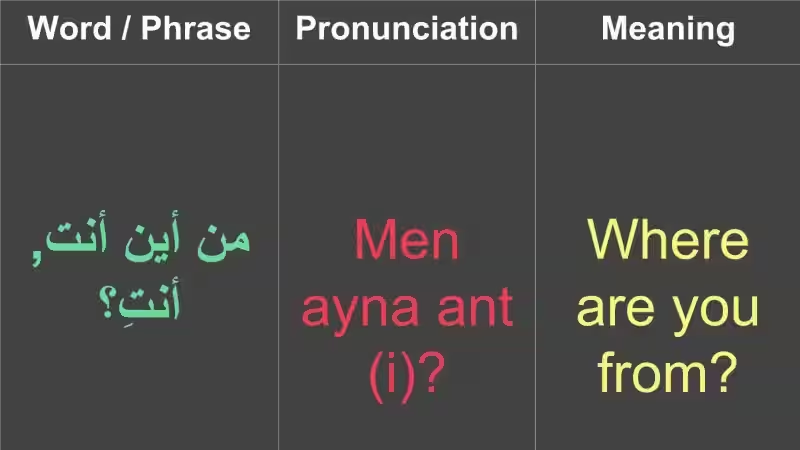
A1: The most straightforward translation is أين أنتِ من؟ (Ayna anta min?) for a male, and أين أنتِ من؟ (Ayna anta min?) for a female. This is generally suitable for informal settings and with people you know well.
Q2: How do I say “Where are you from?” in a more formal way?
A2: For a more formal setting, you could use من أين أنت؟ (Min ayn anta?) for a male, and من أين أنتِ؟ (Min ayn anti?) for a female. This phrasing is appropriate for interactions with superiors, elders, or in official settings.
Q3: Are there regional variations in how to say “Where are you from?”
A3: Yes, subtle variations exist across Arabic-speaking regions. While the core phrases remain similar, specific words or grammatical structures might differ. For example, certain dialects might use alternative verbs of being or prepositional phrases. Consulting a dialect-specific resource is recommended for more precise regional variations.
Q4: How do I ask “Where are you from?” if I want to be polite?
A4: Adding politeness markers can enhance the phrasing. Consider phrases like “معذرة، من أين أنت؟” (Ma’a’adhriran, min ayn anta?) meaning “Excuse me, where are you from?” which conveys a more respectful tone.
Q5: Can I use different verbs than “to be” to ask “Where are you from?”
A5: While the verb “to be” is common, other structures are possible in certain contexts. These might include asking about the origin or lineage, which might lead to different phrasing entirely.
Q6: How do I ask “Where are you from?” about a specific place?
A6: To ask about a specific place, you would modify the question. For example, if you want to ask “Where are you from in Egypt?”, use a phrase like: “من أي منطقة في مصر أنت؟” (Min ay mantiqa fi Masr anta?) meaning “From which region in Egypt are you?”
Q7: Can I use a more concise way of asking “Where are you from?”
A7: Yes, the most basic phrases can be used in concise conversations. However, for more nuanced requests, using the more elaborate phrasing will be necessary.
Q8: Are there other ways to express the idea of origin besides asking “where are you from?”
A8: Yes, other phrases like “What is your origin?” or “Where are your roots?” can be used to inquire about someone’s place of origin in a more culturally sensitive manner.
These answers offer a starting point. To delve further into specific nuances, regional variations, or more conversational phrasing, consult additional Arabic language resources.