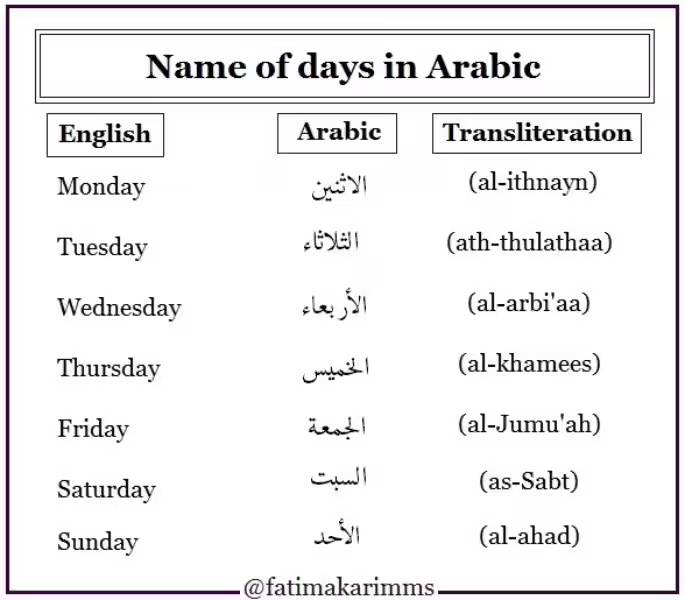
Learning the names of days in Arabic is more than just memorizing vocabulary; it’s a gateway to understanding the rhythm of life in Arab cultures. This exploration into the Arabic names for the days of the week will not only introduce you to the vocabulary but also highlight the cultural and linguistic nuances surrounding this essential aspect of daily life. Comprehending the days of the week is crucial for scheduling appointments, understanding social customs, and navigating everyday interactions.
Understanding the structure of the week in Arabic, often differing from the Western model, is paramount. The week in Arabic frequently begins on Friday, marking a significant day of prayer and worship in Islam. This structure, with Friday as the first day of the week, differs from the common Western structure, which starts with Sunday. Mastering the Arabic names for the days is essential for understanding the cultural context and avoiding misunderstandings. This article will provide a comprehensive guide to grasp this fundamental aspect of the language.
The Structure and Significance of the Arabic Week
The Arabic names for the days of the week often reflect their numerical order within the week. From the first day to the seventh, each day is associated with a specific Arabic term. This numerical order, combined with the cultural and religious significance attached to each day, provides a rich tapestry for understanding the Arabic language. Importantly, the Arabic word for “day” is “yaum,” which is a helpful base word for constructing phrases related to time. This structured approach to learning the days of the week is easily adaptable to other aspects of the language.
This systematic approach is very helpful in the process of memorization, building upon the learner’s existing knowledge of Arabic numerals. This allows individuals to connect the numerical order to the names of the days, fostering a deeper understanding of the language. For example, understanding that “al-ahad” (Sunday) translates to the first day allows for a logical connection. This pattern of systematic learning is key in efficiently expanding vocabulary.
A key component of mastering the days of the week is learning their pronunciation. Arabic pronunciation differs significantly from English, requiring careful attention to vowel sounds, consonant combinations, and stress patterns. Arabic’s complex sounds and rhythm make precise pronunciation fundamental to clear communication.
Day
Arabic Script (Standard Arabic)
Pronunciation Guide
English Translation
Sunday
الأحد (al-ahad)
al-ah-had
Sunday
Monday
الإثنين (al-ithnayn)
al-ith-nayn
Monday
Tuesday
الثلاثاء (ath-thalaathaa’)
ath-thala-thaa-a
Tuesday
Wednesday
الأربعاء (al-arbi’aa’)
al-ar-bi-aa-a
Wednesday
Thursday
الخميس (al-khamis)
al-kha-mis
Thursday
Friday
الجمعة (al-jumu’ah)
al-ju-mu-ah
Friday
Saturday
السبت (as-sabt)
as-sabt
Saturday
This table provides a concise overview of the Arabic names for the days of the week, alongside pronunciation guides, making it easy for learners to pronounce the names accurately. Notice the subtle differences in pronunciation between the names, highlighting the importance of precise articulation.
Practical Application and Examples
Knowing the names of the days of the week is useful in many situations. For example, scheduling appointments, making plans, and discussing past events all require a familiarity with the Arabic days of the week. Understanding the sequential order of these days is key to clear communication.
Here are some example sentences demonstrating how to use the days of the week in simple conversations:
Today is Sunday: اليوم أحد (al-yawm ahad)
Tomorrow is Sunday: غدًا أحد (ghadan ahad)
Yesterday was Sunday: أمس كان أحد (ams kan ahad)
Using these examples, you can start constructing your own simple sentences. These examples illustrate the practical application of the learned vocabulary, facilitating fluency.
Cultural and Religious Significance
While this guide focuses primarily on the vocabulary aspect, it’s crucial to recognize the cultural and religious significance embedded in the names of the days. For example, Friday (al-jumu’ah) is a holy day for Muslims, marked by congregational prayers and a different rhythm of daily life. Saturday (as-sabt) holds significance in the Jewish tradition, and Sunday (al-ahad) in the Christian tradition. Understanding these nuances can enhance appreciation for the cultural context surrounding these words.
The names of the days in Arabic, like many aspects of the language, are deeply rooted in history and culture. The numerical order in Arabic often correlates directly to the order of creation, as described in Islamic tradition. This religious and cultural context adds layers to the meaning of these words, enriching the overall understanding of the language. The cultural significance associated with each day highlights the importance of acknowledging the role of religion in shaping language and culture.
Mastering the Arabic names for the days of the week is not just about memorization; it’s a step towards understanding the cultural fabric of Arab societies. This concise guide provides a foundation for further exploration into the rich linguistic and cultural nuances surrounding this fundamental vocabulary. Exploring the complexities and cultural significance behind these names will enrich your understanding of the Arab world and its diverse traditions. Further exploration into the historical context of the days will provide a deeper understanding of their importance and significance. Remember, the journey of language learning is a journey of discovery, and this exploration into the names of days in Arabic is only the beginning.
Arabic Days of the Week: Frequently Asked Questions
This FAQ section provides answers to common questions about the Arabic names for the days of the week. It focuses on the practical application of the vocabulary, avoiding cultural or religious interpretations.
What is the Arabic word for “day”?
The Arabic word for “day” is “yaum” (يوم).
How are the days of the week numbered in Arabic?
Arabic days of the week are typically numbered sequentially, starting from Sunday. This follows the general counting system, except for Friday, which has a specific name, “al-Jumu’ah”.
Friday, or “al-Jumu’ah” (الجمعة), is given a unique name because of its religious significance in Islam.
How do I pronounce the days of the week in Arabic?
Accurate pronunciation is crucial for effective communication. While a full phonetic guide is beyond this scope, online resources and language learning tools can provide pronunciation aids.
Can you give examples of sentences using the days of the week?
Here are some examples:
Today is Sunday: اليوم هو الأحد (al-yawm hu al-ahad)
Tomorrow is Sunday: غداً هو الأحد (Ghadan hu al-ahad)
Yesterday was Sunday: أمس كان الأحد (Ams kan al-ahad)
How can I learn the Arabic days of the week effectively?
Memorization techniques like flashcards, repetition, and using the words in sentences can be effective. Engaging with online resources and using audio aids can further aid in pronunciation.
What are some additional resources to learn more about Arabic days of the week?
Numerous online resources, language learning apps, and language courses can provide additional practice and support in learning the Arabic days of the week.