Navigating the Arabic Week: More Than Just Days of the Week
The Arabic week is a fascinating window into the cultural and religious influences that shape the lives of Arabic-speaking communities. Unlike the Western world, where the week starts on Monday and ends on Sunday, the Arabic week begins on Sunday, with Friday and Saturday constituting the weekend. This shift in the weekend structure isn’t just a matter of calendar convention; it reflects a deep connection to the Islamic faith, where Friday holds immense religious significance as the day of congregational prayer.
Understanding the Arabic week goes beyond simply knowing the names of the days. It involves grasping the cultural context and social norms that surround them. This knowledge is invaluable for anyone interacting with Arabic-speaking populations, whether for business, travel, or personal connections. Imagine trying to schedule a meeting without knowing that Friday is a day of rest and social gathering in many Arab countries. Or, imagine the awkwardness of planning a social outing for a Sunday, only to realize that it’s considered the start of the week and a working day.
The seven-day week, as we know it, has its origins in ancient Mesopotamia, around 4,000 years ago. The Babylonian Empire adopted this system, and it later spread through Judaism and eventually to the Roman Empire. The Romans established Sunday as a day of rest and worship, marking the beginning of the Western week structure.
However, the Arabic week, influenced by the Islamic faith, shifted the weekend to Friday and Saturday. This shift reflects the importance of Friday as a day of prayer and congregation in Islam, a practice that contrasts with the Christian tradition of Sunday worship and the Jewish observance of Saturday as a Sabbath.
Variations in Weekend Structure Across the Arab World
While most Arab countries observe Friday and Saturday as the weekend, some countries have adopted the Western Saturday-Sunday weekend due to globalization and economic considerations. Lebanon, Tunisia, and Morocco have implemented this change, likely influenced by their historical Christian presence. The UAE, a major commercial hub, also follows the Saturday-Sunday weekend to align with global business practices.
Saudi Arabia and Oman previously observed Thursday and Friday as their weekend, but in 2013, they shifted to Friday-Saturday to align with their neighbors and facilitate greater economic integration. This shift demonstrates the evolving nature of weekend practices in the Arab world, influenced by both cultural and economic factors.
Days of the Week in Arabic: A Deep Dive
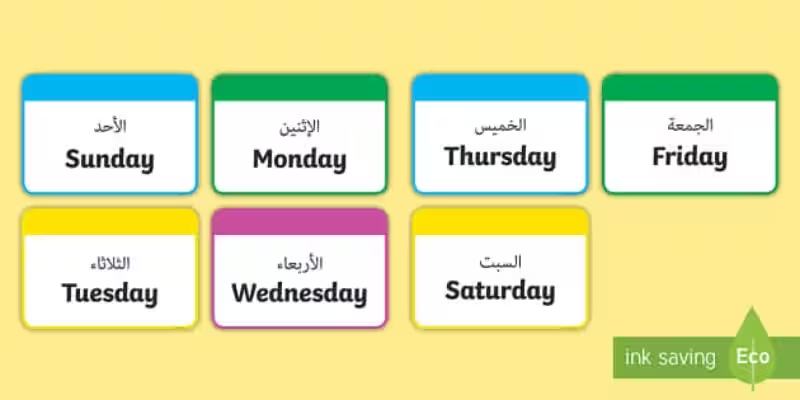
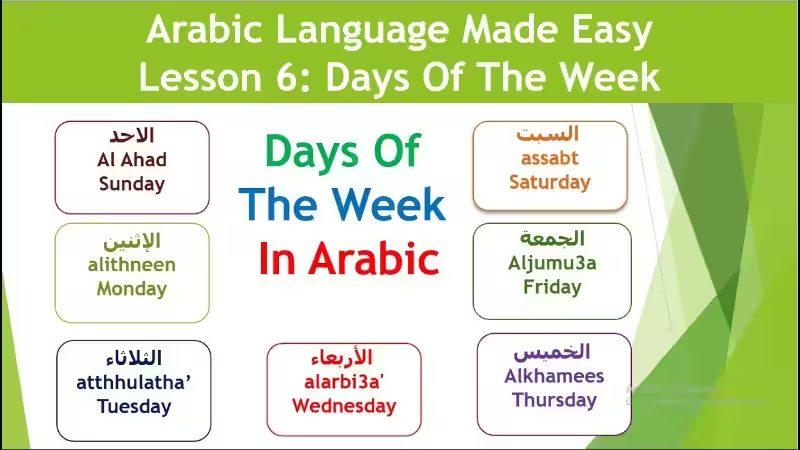
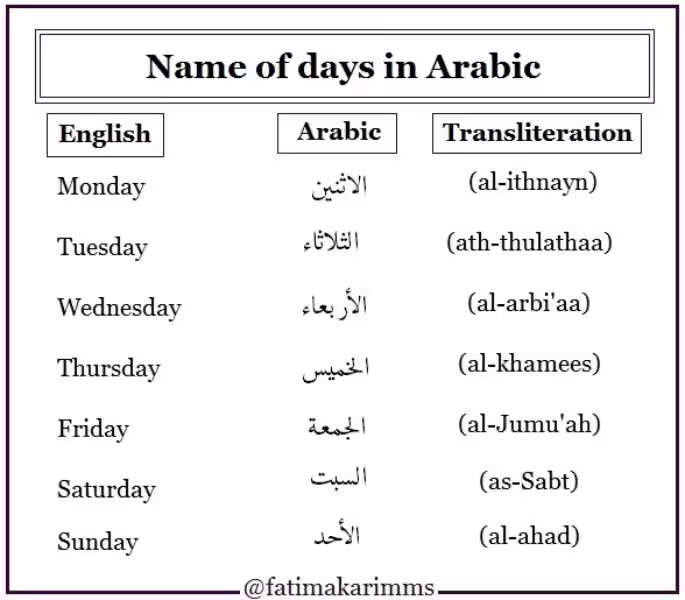
The Arabic names for the days of the week are largely based on their numerical order within the week. The word for “day” in Arabic is “yoom” (يوم), and the word for “week” is “usbuu3” (أسبوع). Here’s a table showcasing the names of the days in Standard Arabic and various dialects:
Day
Standard Arabic
Egyptian
Levantine
Gulf
Maghrebi
Sunday
al-‘ahad (الأحد)
el-7ad
el-7ad
el-ahad
el-7ed
Monday
al-‘ithnayn (الإثنين)
el-etnayn
el-tnin
el-ithnayn
el-tniin
Tuesday
al-thulaathaa’ (الثلاثاء)
el-tlaat
el-tlaat
el-thulaatha
el-tlata
Wednesday
al-‘arbi’aa’ (الأربعاء)
el-arba’a
el-arba’a
el-arba’a
el-arba3a
Thursday
al-khamees (الخميس)
el-khamees
el-khamees
el-khamees
el-khemis
Friday
al-jum’ah (الجمعة)
el-gom’a
el-jumu’a
el-jum’a
el-jmaa
Saturday
al-sabt (السبت)
es-sebt
es-sebt
as-sabt
es-sebt
Notice how most of the names are derived from their numerical order within the week. For example, “al-‘ithnayn” (Monday) means “the second,” “al-thulaathaa'” (Tuesday) means “the third,” and so on. This pattern emphasizes the importance of numerical order in the Arabic language and its cultural significance.
Beyond their numerical designation, Friday and Saturday hold specific cultural significance in the Arabic world. Friday, as the holy day of prayer and congregation, is a time for families to gather, attend mosque services, and engage in social activities. Many businesses and shops close on Friday afternoon or evening, allowing for a more relaxed and spiritual atmosphere.
Saturday, while not as religiously significant as Friday, is generally considered a day of rest and relaxation. Many people use Saturday to catch up on errands, spend time with family, or pursue personal hobbies. However, the weekend structure in some countries like Lebanon, Tunisia, and Morocco, with its Saturday-Sunday format, may lead to slightly different social norms and activity patterns.
Learning the Arabic Days of the Week: Why it Matters
Understanding the Arabic week, beyond simply knowing the days, is essential for effective communication and cultural sensitivity when interacting with Arabic-speaking communities. Learning the names of the days, their numerical order, and their cultural significance allows for:
Avoiding closed businesses on weekends: Knowing when businesses are closed during the weekend helps you plan your errands and appointments effectively.
Effectively scheduling official matters: Understanding the working week structure ensures that you don’t schedule meetings or appointments on days when people are likely to be unavailable.
Planning social activities during suitable times: Knowing when people are more likely to be free and available for social gatherings allows you to plan outings and events during appropriate times.
Respecting cultural norms and avoiding social faux pas: Being aware of the cultural significance of certain days, like Friday, helps you avoid making unintentional mistakes or showing disrespect.
Beyond vocabulary, understanding the Arabic week allows for deeper cultural engagement and more meaningful interactions with Arabic-speaking communities. It shows respect for their traditions and values, leading to more positive and productive relationships. So, the next time you encounter a date or schedule in Arabic, take a moment to appreciate the nuances of the week and its place in the rich cultural tapestry of the Arab world.
Frequently Asked Questions about Days of the Week in Arabic
What is the first day of the week in Arabic?
Sunday.
What is the Arabic word for “day”?
“Yaum” (يوم)
What is the Arabic word for “week”?
“Usbuu3” (أسبوع)
Why is Friday considered a special day in Arabic-speaking countries?
It is the holy day of prayer and congregation in the Islamic faith.
What is the traditional weekend in Arabic-speaking countries?
Friday and Saturday.
What are the exceptions to the traditional Friday-Saturday weekend?
Lebanon, Tunisia, Morocco, and the UAE observe the Western Saturday-Sunday weekend.
How are the days of the week named in Arabic?
Most days of the week are named based on their numerical order in the week (except for Friday and Saturday).
What are some common dialects of Arabic that use different names for the days of the week?
Egyptian, Levantine, Gulf, and Maghrebi.
Are there specific phrases for “today,” “tomorrow,” and “yesterday” in Arabic?
Yes, there are specific phrases for each.
The Arabic week begins on Sunday, not Monday.
Most Arabic days of the week are named based on their numerical order.
Friday is a special case and is named for its significance in Islam.
Traditional weekend days vary by country, with some countries adopting the Friday-Saturday structure, while others follow the Saturday-Sunday structure.
Learning the Arabic days of the week is important for understanding cultural practices, scheduling appointments, and avoiding misunderstandings.