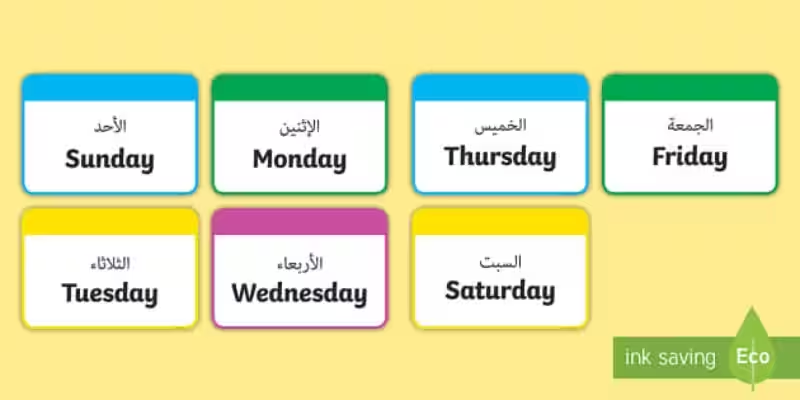
Days of the Week in the Arabic Language: A Beginner’s Guide
Learning the days of the week in Arabic, يوم الأسبوع بالعربية (youm al-isbu’ bi-l-‘Arabiyya), is a crucial step in understanding the language and navigating daily life within Arabic-speaking cultures. Mastering these fundamental building blocks opens doors to more complex conversations and a deeper understanding of the Arabic-speaking world.
This guide will introduce you to the Arabic names for the days of the week, emphasizing their structure and providing practical examples for use. Understanding the system behind the names will significantly aid memorization and application. Arabic, like many languages, uses a numerical system to denote the days of the week, rather than using distinct, unrelated names for each day. This structure, once grasped, makes learning significantly easier.
The Arabic week, unlike the European one, begins on Friday. This reflection of Islamic tradition is crucial to understand. The days progress sequentially, with each day’s name related to its position within the week. The structure isn’t random; it’s a logical system built on the Arabic language’s inherent structure. This systematic approach, while different from English, can be surprisingly straightforward once you understand the underlying pattern. By recognizing this crucial difference, you’ll be able to anticipate the order of the days and avoid confusion.
The Numerical Pattern
A key feature of the Arabic days of the week is their connection to numbers in the Arabic language. Sunday, for example, is al-ahad (الأحد), meaning “the first.” Monday is al-ithnayn (الإثنين), meaning “the second,” and so on, following the Arabic numbering system. This numerical pattern makes it easier to remember and recall the days. This methodical approach, when applied, can be a powerful tool in your Arabic study.
Friday, al-jumu’a (الجمعة), stands out as a unique day in the Arabic week. It’s not just another day of the week; it’s a day of particular religious significance for Muslims, marking the time for congregational prayer in mosques. This unique status of Friday reflects its importance in Muslim culture and daily life. The word itself, “al-jumu’a,” signifies a gathering or congregation. This understanding adds another layer to your linguistic journey.
Pronunciation and Translation
Correct pronunciation is essential for effective communication. While the written form might seem straightforward, the spoken Arabic has subtle sounds and intonations that can easily be missed. The phonetic transcriptions provided are crucial for proper pronunciation. Take note of any unique sounds in the Arabic language that differ from English phonetics. Take advantage of audio resources to perfect your pronunciation.
Arabic (Standard)
Pronunciation Guide
English Translation
الأحد (al-ahad)
al-uh-had
Sunday
الإثنين (al-ithnayn)
al-ith-nayn
Monday
الثلاثاء (al-thulatha’a)
al-thoo-lah-thaa
Tuesday
الأربعاء (al-arba’a’)
al-ar-bah-ah
Wednesday
الخميس (al-khamees)
al-khah-mees
Thursday
الجمعة (al-jumu’a)
al-jum-ah
Friday
السبت (as-sabt)
as-sabt
Saturday
Using these tables and audio resources will help you understand the nuances of pronunciation.
Practical Application
Beyond memorizing the names, understanding how to use these words in sentences is essential.
Today is Sunday: اليوم هو الأحد (al-yaum hu al-ahad)
Tomorrow is Sunday: غداً الأحد (ghadan al-ahad)
Yesterday was Sunday: البارحة كان الأحد (al-barḥa kān al-ahad)
These examples demonstrate the practical use of the days of the week within complete sentences.
Tips for Learning
Flashcards: Create flashcards with the Arabic word, its pronunciation guide, and the English translation.
Mnemonic Devices: Associate the Arabic words with visual images or mental cues to aid memorization.
Audio Resources: Listen to audio recordings of the days of the week to help perfect pronunciation.
Daily Practice: Incorporate the days of the week into your daily routine, to deepen your familiarity and understanding.
Language Exchange: Practice with native speakers to reinforce your understanding and fluency. Practicing with native speakers can provide immediate feedback and a more rounded learning experience.
By employing these tools, you can significantly accelerate your learning process. Mastering the days of the week is a fundamental step toward fluency.
Understanding the days of the week in Arabic is essential for navigating daily life and interacting confidently in the Arabic-speaking world. The numerical pattern and the unique status of Friday add depth to the learning process. Employing flashcards, audio resources, and consistent practice will help you master this important aspect of the Arabic language. Remember, consistent practice, aided by diverse learning tools, is key to successful language acquisition.
Frequently Asked Questions about Arabic Days of the Week
How are the days of the week named in Arabic?
The Arabic days of the week, with the exception of Friday (al-jumu’a) and Saturday (as-sabt), are named based on their numerical order within the week. Sunday is “al-ahad” (الأحد), meaning “one”; Monday is “al-ithnayn” (الإثنين), meaning “two”; and so on. Friday and Saturday are unique names, not derived from numbers.
Why is Friday different?
Friday, “al-jumu’a” (الجمعة), is a significant day in Islam, the day of the congregational prayer. The word “jumu’a” itself means “gathering” or “congregation.”
Why is Saturday different?
Saturday, “as-sabt” (السبت), is a day associated with rest, likely stemming from earlier traditions.
Does the Arabic week start on a different day than the Western week?
Yes, the Islamic week traditionally starts on Friday, and ends on Thursday.
How do I pronounce the Arabic days of the week correctly?
Proper pronunciation is crucial. While a full phonetic guide is beyond this FAQ, resources like online audio recordings or language learning apps can be helpful in mastering the sounds and accents unique to Arabic.
Are there dialects of Arabic that use different names for the days of the week?
While the standard Arabic names are widely understood, regional dialects might have slight variations, but the core concept of numbering remains consistent.
How can I use this knowledge in daily conversations?
Knowing the names of the days of the week is essential for scheduling, making appointments, and understanding daily routines in an Arabic-speaking environment. You can use phrases like “Today is Sunday” (اليوم هو الأحد – al-yaum hu al-ahad), “Tomorrow is Sunday” (غدا الأحد – ghadan al-ahad), and “Yesterday was Sunday” (البارحة كان الأحد – al-bariḥa kān al-ahad).
Is there a particular cultural significance to the days of the week in Arabic-speaking countries?
Beyond their numerical order, Friday, in particular, holds a strong cultural and religious significance for Muslims. It’s important to be mindful of this when interacting with people from these cultures. Different days may also be associated with different activities or events in various communities.