Days of the Week in Arabic Language: A Beginner’s Guide
Learning the days of the week in Arabic, or أيام الأسبوع (ayyam al-isbu’ ), is a fundamental step in understanding the language and culture. This article will provide a straightforward introduction to the Arabic names, pronunciations, and basic sentence structures involving the days of the week. This will help you navigate daily conversations and interactions with Arabic speakers.
The Arabic week, like many other language systems, follows a seven-day structure. Crucially, the days in Arabic are numbered, though Friday, or الجمعة (al-Juma), stands apart as a unique entity not numbered. The Arabic word for “day” is يوم (yaum). This is a vital concept to grasp as it underpins the structure of expressing days in the language.
The names for each day of the week are derived from the numbers assigned to the days; this, however, is not the case for Friday. Understanding this numerical structure will greatly enhance memorization. The systematic approach will help form a solid base for future linguistic learning. This aspect, while seemingly basic, is important to grasp for a better understanding of Arabic grammar.
Learning the Days of the Week: Vocabulary and Pronunciation
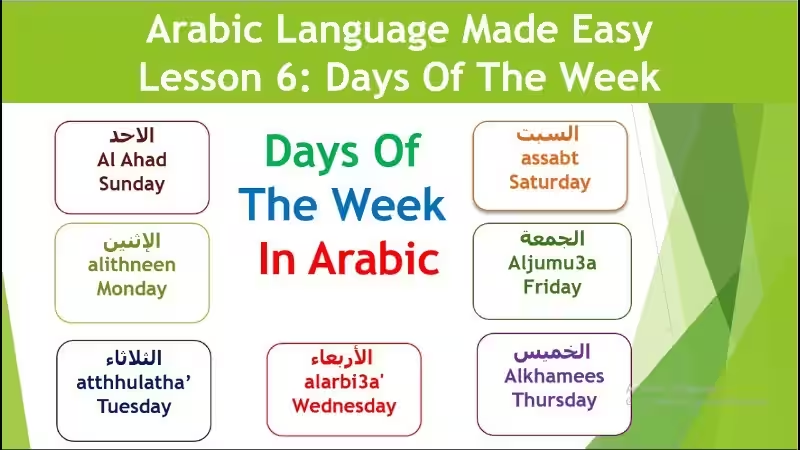
This section provides a table detailing the days of the week in Standard Arabic, including a pronunciation guide and English translations. Learning these pronunciations is vital for effective communication in the Arabic-speaking world.
This table lays the groundwork for memorizing the days of the week. Each day’s pronunciation is crucial for effective communication and accurate understanding. Mastering these pronunciations is essential for clear and concise communication when speaking with native Arabic speakers. This provides the core vocabulary needed for conversation.
Forming Basic Sentences with Days of the Week
Now that you have the vocabulary, let’s look at how to use these days in basic sentences:
Expressing the Current Day
Today is Sunday: الْيَوْمُ هُوَ الْأَحَدُ (al-yaum huwa al-ahad)
Today is Monday: الْيَوْمُ هُوَ الاِثْنَين (al-yaum huwa al-ithnayn)
Today is Tuesday: الْيَوْمُ هُوَ الثُّلَاثَاء (al-yaum huwa al-thalatha’a)
These examples demonstrate the grammatical order of the sentence. The word “today” is “al-yaum” (“اليوم”). This is followed by the word “is” (or “هو” – huwa/هي – hiya, for feminine). Finally, the specific day of the week follows.
Expressing Yesterday and Tomorrow
Yesterday was Sunday: أَمْسُ كَانَ الْأَحَدُ (amsu kana al-ahad)
Tomorrow is Monday: غَدًا هُوَ الاِثْنَين (ghada huwa al-ithnayn)
These examples illustrate the use of “yesterday” (أمس – amsu) and “tomorrow” (غداً – ghada). Notice the change in verb conjugation. This is a fundamental aspect of Arabic grammar. Understanding the structure of days in the past and future is essential.
Practical Application: A Short Dialogue
Imagine you are planning a visit to family. Let’s translate a short paragraph about visiting family on different days of the week:
الجمعة الماضي زرت عائلتي، والجمعة القادم سأزورهم مرة أخرى. (Al-jum’a al-madi zaart ‘a’ilati, wa al-jum’a al-qadiim sa azuruhum mara akhra.)
This translates to: “Last Friday, I visited my family, and next Friday I will visit them again.” Notice the use of “al-jum’a” which is the specific Arabic name for Friday. This example demonstrates the practical application of the days of the week in a more complex sentence. It is crucial to understand that “al-madi” refers to the past, and “al-qadiim” to the future.
This comprehensive guide has provided a fundamental introduction to the days of the week in Arabic. It has covered vocabulary, basic sentence structures, and practical applications. Embracing rote learning and consistent practice will be crucial in your language learning journey. Remember, learning the days of the week is just the first step in the exciting process of learning Arabic.
FAQ: Days of the Week in Arabic
How are the days of the week named in Arabic?
The days of the week in Arabic are numbered, with the exception of Friday, which is called “Juma”. Sunday is “al-ahad”, Monday is “al-ithnayn”, and so on. The word for “day” is “yaum”. Different dialects of Arabic may have slight variations in pronunciation.
What is the difference between the Arabic and Western week structure?
While the seven-day structure is shared, Friday often marks the start of the weekend in many Arab cultures due to religious observance. Weekend schedules can vary across Arab countries, with some aligning with Western traditions (Saturday/Sunday) and others maintaining Friday/Saturday as the weekend.
How do I say “today is…” in Arabic?
The basic structure is “al-yaum hu [day name]”. For example, “Today is Sunday” is “al-yaum hu al-ahad”. Remember to use the correct Arabic article (“al-“) when needed.
How do I express days of the week in the past and future tense?
While the provided texts do not use the specific terms “past tense” and “future tense”, they illustrate how to express days in the past and future using general grammatical structures. For example, to talk about yesterday, you would use a past tense structure, likely involving the word “al madi” (the past). To talk about tomorrow, you would use a future tense structure, likely involving the word “al qadeem”(the next). More specific grammatical examples depend on the particular Arabic structure and sentence being used. Please refer to more comprehensive Arabic grammar resources for details.
Are there variations in the days of the week across different Arabic dialects?
Yes. While the core names share similarities, pronunciations and spellings may vary in different Arabic dialects, such as Egyptian, Levantine, Gulf, and Maghrebi. These variations are highlighted in some of the provided texts.
What is the significance of the days of the week in Arab cultures?
The days of the week hold cultural significance, particularly concerning religious observance. Understanding the differing weekend schedules is essential for cultural awareness and effective communication in Arab communities.
How can I learn more about the days of the week in Arabic?
The provided texts offer a basic introduction. Further learning can be achieved through more in-depth grammar resources, language learning platforms (such as Playaling mentioned in one article), and immersion in the Arabic language and culture.